The 2020 Forex Crash: Lessons Every Trader Must Know Today
 MENA Capital

 5 Min
5 Min
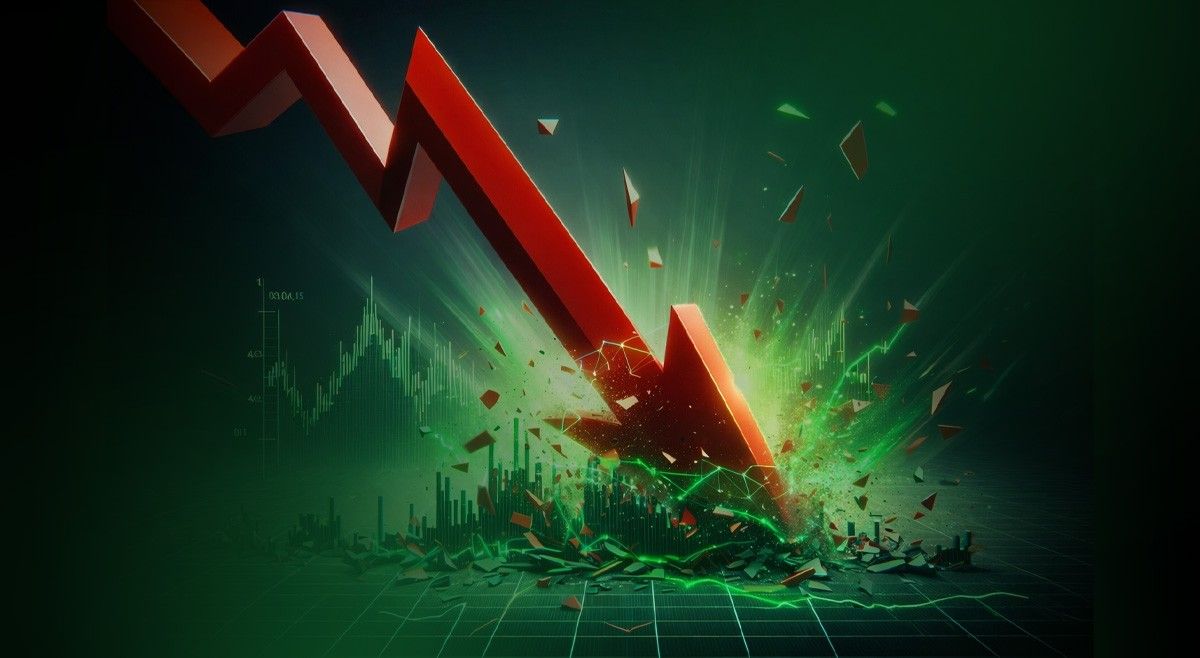
March 2020. Airports emptied overnight. Cities locked down one by one. And in trading rooms around the world, screens turned red.
What followed was unlike anything the financial world had seen in decades - and it holds some of the most powerful lessons for anyone who wants to understand how markets really work.
33 Days That Rewrote Financial History
It started quietly. In January 2020, news trickled in about a strange new virus spreading in China. Most traders barely glanced at the headlines. Markets were near all-time highs. Confidence was high. Nobody was worried.
Then reality hit.
By late February, COVID-19 was tearing through Europe. Italy went into full lockdown. The United States declared a national emergency. And financial markets began to panic in a way that hadn't been seen since 2008 - except this time, it was faster. Much faster.
Between February 20 and March 23, 2020, global stock markets lost approximately 34% of their value in just 33 days. For context, the 2008 financial crisis took over a year to reach similar losses. This was the fastest crash in modern market history - and it caught millions of investors completely off guard.
What the COVID Crash Did to Forex Markets
While stock markets collapsed, the forex market - the largest financial market on earth, with over $7.5 trillion traded every single day - entered a period of extreme, historic volatility. For those who understood what was happening, it was one of the most extraordinary trading environments ever seen.
The US Dollar surged. When fear grips global markets, investors rush to safety. And nothing says safety like the US Dollar. In March 2020, the DXY Dollar Index surged nearly 9% in just two weeks - one of the sharpest dollar rallies ever recorded. This was a critical lesson: in times of global crisis, the dollar often strengthens, even when the crisis originates inside the United States itself.
The Japanese Yen became a lifeline. The Yen has long been known as the ultimate safe haven currency. When panic spreads, investors sell risky assets and pile into JPY. In March 2020, USD/JPY dropped sharply as the yen surged in value. Traders who understood this dynamic and positioned correctly made significant profits during some of the most volatile days in recent memory.
Oil currencies were crushed. Countries whose economies are tied to oil - and their currencies - were among the hardest hit. The Canadian Dollar collapsed. The Norwegian Krone fell sharply. For traders in the Gulf region, this matters directly: oil price shocks ripple through regional sentiment, investment flows, and the broader economic outlook across the Middle East.
Emerging market currencies were devastated. The South African Rand, the Brazilian Real, the Turkish Lira - all fell sharply as investors pulled capital out of riskier markets and fled to safe havens. This pattern - risk-off flows during global crises - is one of the most consistent and important forces in all of forex trading.
The Day Oil Went Negative
On April 20, 2020, something happened that had never occurred in recorded financial history.
The price of US crude oil (WTI) fell below zero - to negative $37.63 per barrel. That means sellers were literally paying buyers to take oil off their hands. Storage facilities across the United States were completely full. Demand had collapsed. Nobody was flying, driving, or manufacturing anything. The world had simply stopped consuming energy.
For traders watching their screens that afternoon, it felt surreal - like watching the laws of economics temporarily break down. For those who understood the underlying fundamentals and were positioned correctly, it represented a once-in-a-generation trading opportunity. For the unprepared, it was a devastating lesson written entirely in losses.
Who Made Money During the Crash?
While millions of retail investors suffered significant losses, some traders and funds made historic profits. How?
Short sellers who bet that prices would fall made extraordinary returns - some hedge funds posted gains of 30%, 50%, even 100% during March 2020 alone.
Safe haven buyers who had moved into gold, USD, and JPY before the crash saw their positions surge dramatically in value.
Disciplined risk managers who had stop-loss orders and clear position sizing rules in place didn't necessarily make spectacular profits - but they protected their capital and survived. In a crash of this magnitude, surviving is itself a form of winning.
Patient, contrarian buyers who had the courage to buy quality assets at the March 2020 lows earned extraordinary returns over the following twelve months as global markets recovered sharply.
As Warren Buffett famously put it: "Be fearful when others are greedy, and greedy when others are fearful." The COVID crash was one of the clearest illustrations of that principle in living memory.
The COVID crash of 2020 was one of the most frightening events in modern financial history. But for those who had taken the time to learn how markets work - safe haven flows, currency dynamics, risk management, the psychology of fear - it was also an extraordinary classroom.
The traders who came out ahead were not the smartest in the room or the luckiest. They were simply the most prepared.
Whatever the markets bring next, preparation starts today.
Disclaimer: Forex trading involves significant risk and is not suitable for all investors. Past market events do not guarantee future results. Please ensure you fully understand the risks before trading.